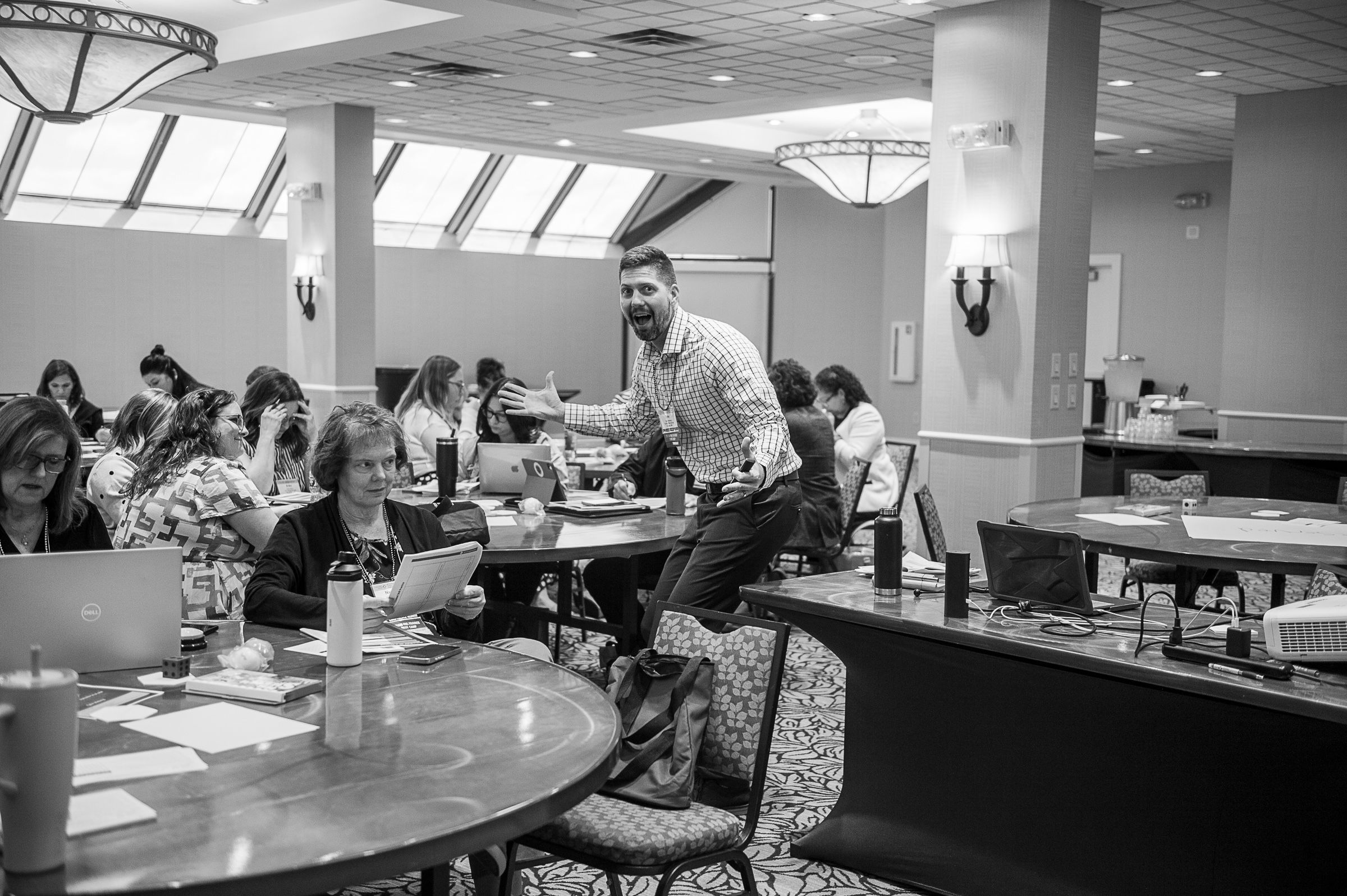
I started my career in the classroom. If you want to learn how people learn, I recommend it. Students don't pretend to be engaged, so you find out fast whether your teaching works.
That classroom taught me the principle that still shapes every session I run: people don't learn much from watching someone else talk. So I built my teaching around getting students talking, doing, and figuring things out, and I carried that into my years as an instructional coach helping other teachers do the same.
The brain that talks is the brain that learns.
From there I became a National Trainer for The Bob Pike Group, teaching participant-centered training methods to professional trainers across the country. Different rooms, same truth. Adults in boardrooms learn exactly the way kids in classrooms do: by practicing, not by listening.
Then AI arrived, and I watched smart organizations respond with the oldest move in the book. Put everyone in a room, show them the tool, talk for an hour, and hope it sticks.
I'd spent two decades watching that approach fail with every other skill. It was failing with AI the same way, just faster and with higher stakes.
So I built Amplified Impact around a different bet: AI isn't a technical challenge, it's a learning challenge.
The people I work with are mostly professionals who feel like they're not getting as much out of AI as they'd like. They don't need more information. They need practice, on their real work, with someone who knows how skills actually form.
Go slow to go fast.
It sounds backwards, and it's the reason the learning sticks.