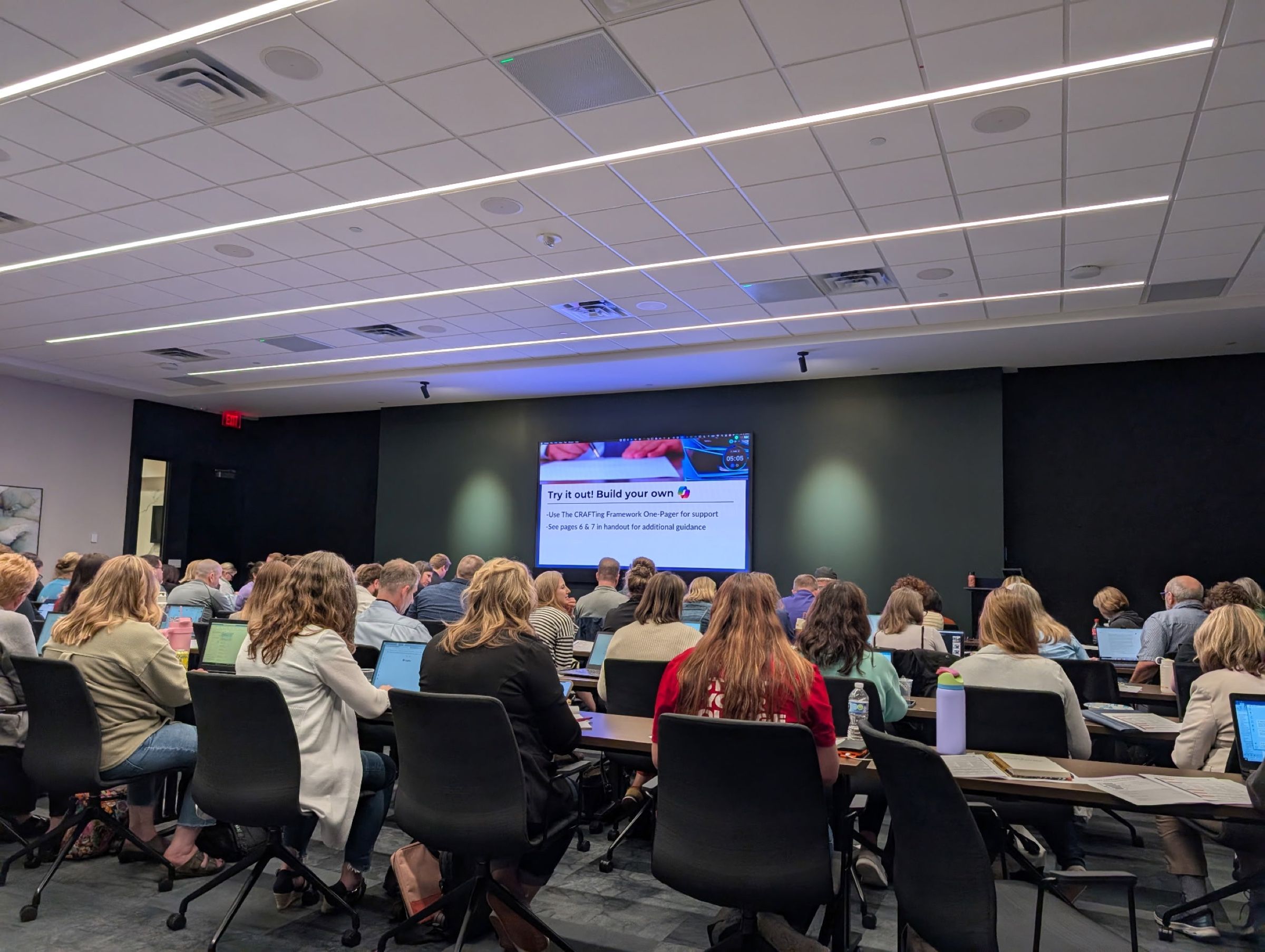
Bring the work. We’ll practice together.
Learning happens when people get a chance to try, ask questions, and figure things out. That's how I build every session, whether I'm with a leadership team or a room full of first-time AI users.
What your team walks away able to do.
Every format on this page points at the same four outcomes. Across 547 post-training survey responses, confidence moved from 2.3 to 3.7 on a 1 to 5 scale, and the NPS landed at 67, well above the B2B median of 38.
They use AI on their own real work.
Not demo data. The reports, emails, and plans they actually own.
The quality improves, not just the speed.
Faster is easy. Better is what we practice, and better is what your team will notice.
AI amplifies their judgment.
Thought partner, not thought replacer. Their expertise stays in charge.
They know what to trust.
What to verify, what to push back on, and when to close the laptop.
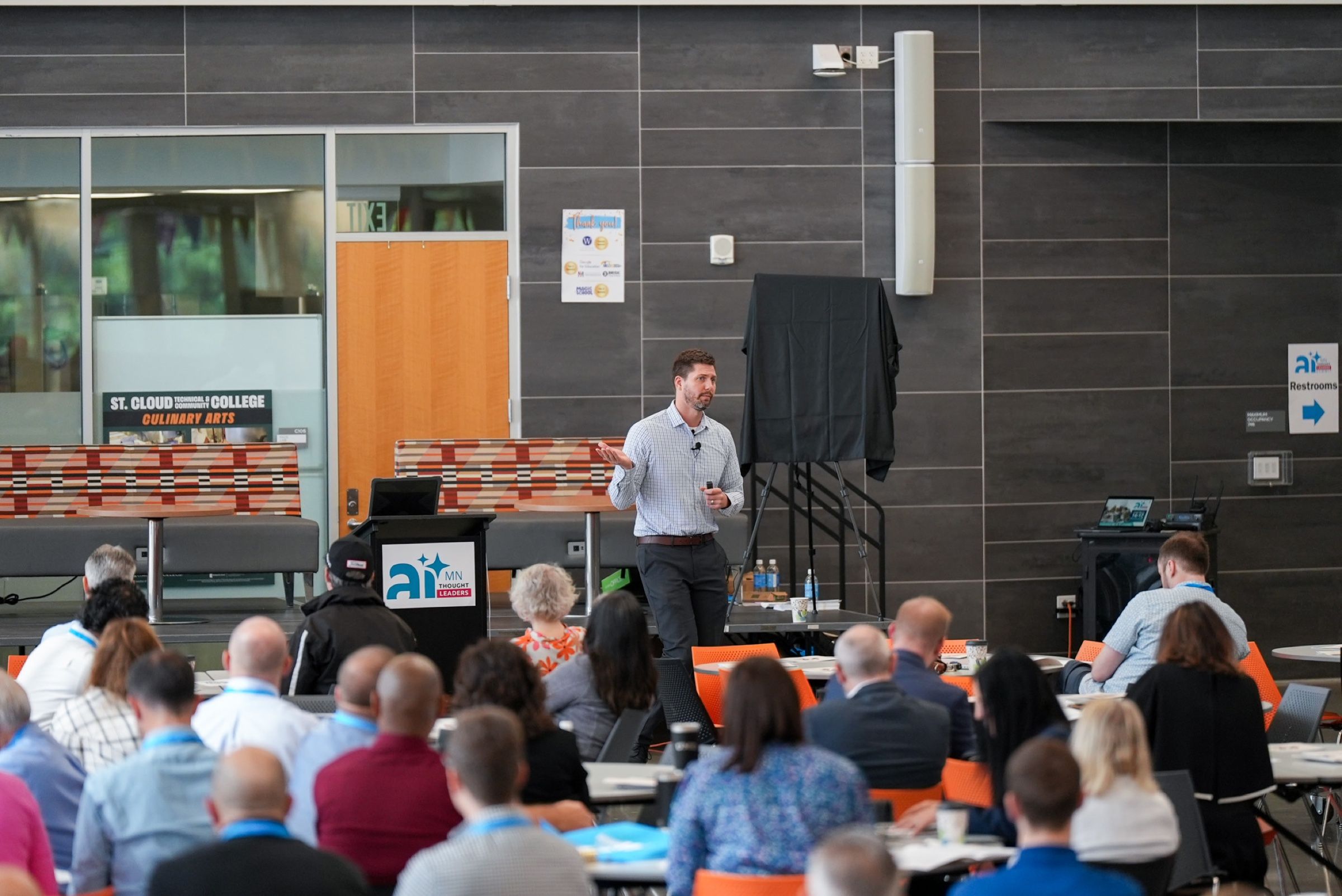
Start here: the signature session
Practical AI for Professionals
90 minutes, 2 hours, or a half day, in person or virtual
This is where most teams start. It's the most popular session I run and the best foundation for everything else on this page.
It's built for corporate, healthcare, engineering, government, and nonprofit teams who want hands-on AI without abstract theory. Mixed rooms are the point. Your power users and your skeptics will both walk out with something they can use.
Here's how it works. Your team learns a simple framework for working with AI in a human-centered, responsible way, then applies it immediately to work they brought with them: the emails, reports, and plans already sitting on their desks.
Along the way, we name the most common mistakes people make with AI and fix them on the spot. Before the session ends, every person in the room has used AI on their actual job.
The outcome is a shared language for AI and the confidence to keep going Monday morning. When UAB Medical Center ran this session, participants rated it 8.8 out of 10 and 92% reported improved confidence.
Book a callMost valuable workshop I have done in the last year that will directly affect my daily workload.
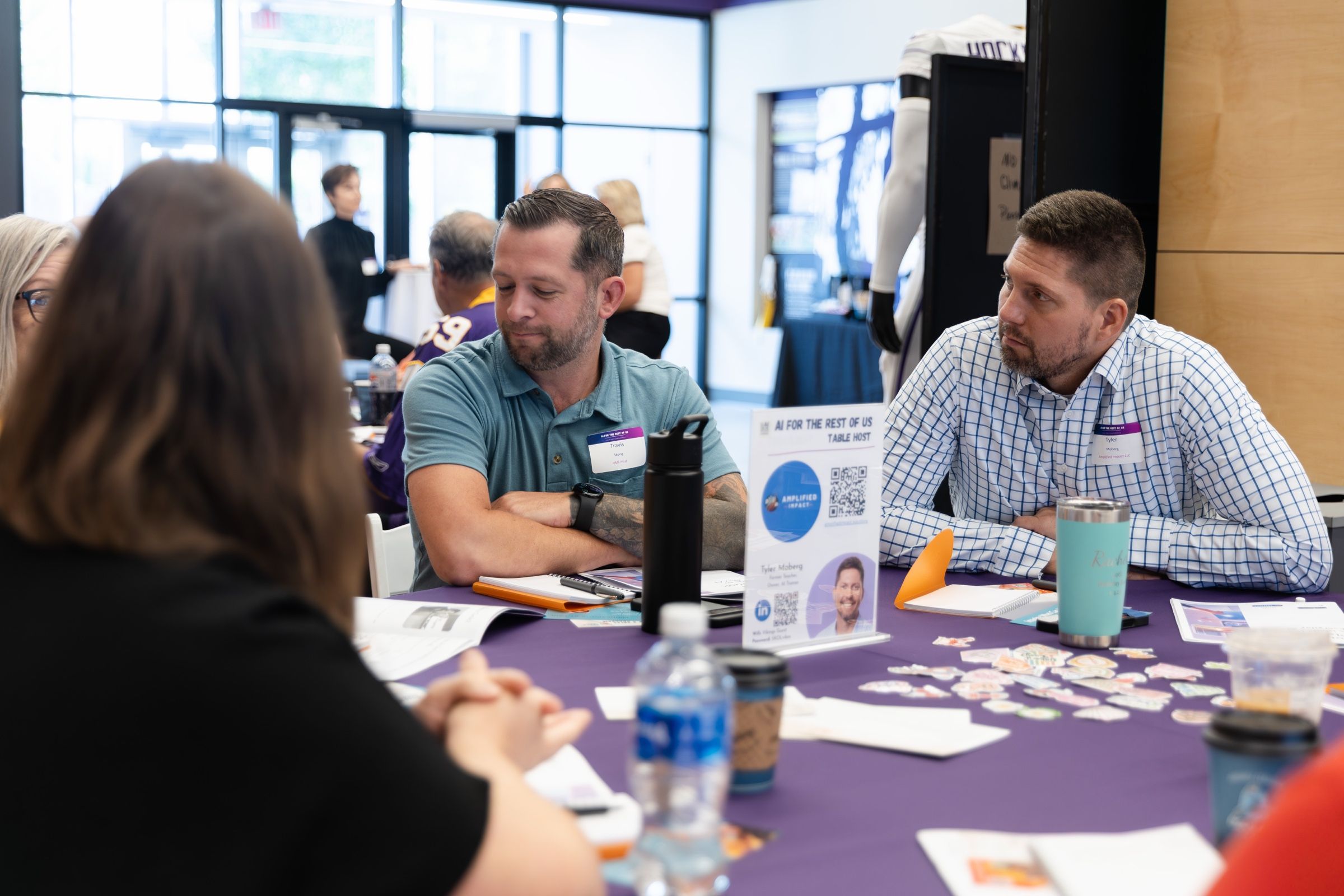
Go deeper: build on your real projects
AI Workshop Labs
Full day, or five 90-minute labs, in person or virtual
Labs are for teams that already have a foundation and want to go deeper. If your people have been through a crash course or a keynote, this is the natural next step.
The format rotates through build, test, compare, and refine, so nobody sits still for long. Your team builds custom workflows on their real projects, with me in the room pushing the quality higher at every pass.
It's the opposite of a seminar. Small groups work the problems they actually face, and what they build goes back to work with them the next day.
Book a callHow much 6.5hrs has changed my life … Unreal. I am hooked.
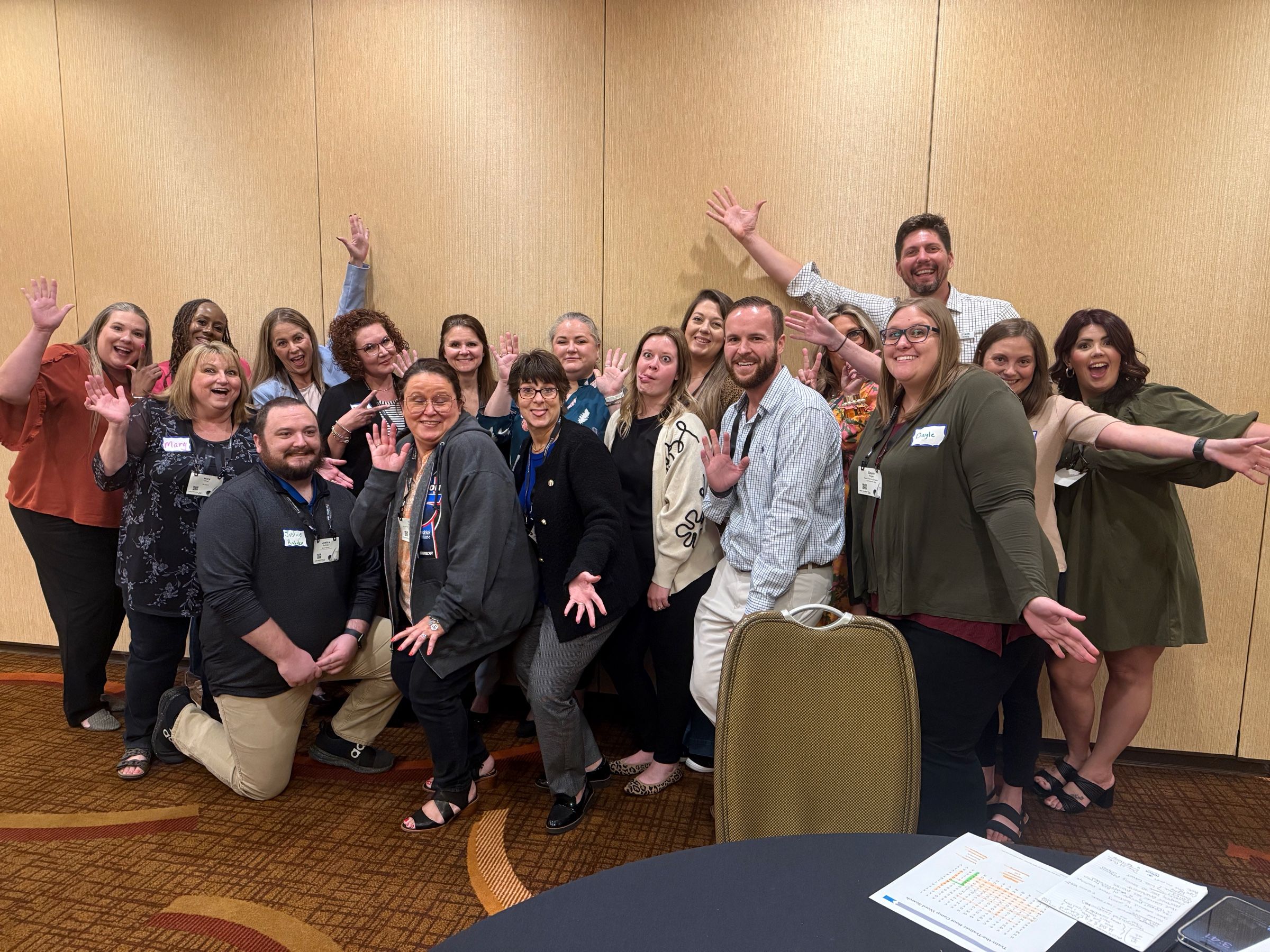
Make it stick: a 3-week team cohort
AI Amplifier Challenge
3 weeks, team competition, runs inside the workday
If you've been burned by training that didn't stick, this is the answer I built for that exact problem.
The Challenge is a three-week team cohort that turns one session's worth of momentum into a habit. Your team works through job-embedded challenges (there are more than 90, customized to your work), a leaderboard tallies itself automatically, and a full communications calendar keeps the energy up without you lifting a finger.
I also train one of your people to run it as the internal facilitator. That part matters more than any of the rest. The habit belongs to your team, not to me.
One session opens the door. The Challenge is what happens after.
A lot of the material you gave us a starting point, and then we did the KL twist on it and made it ours. But, to not have to start from scratch on everything was huge.
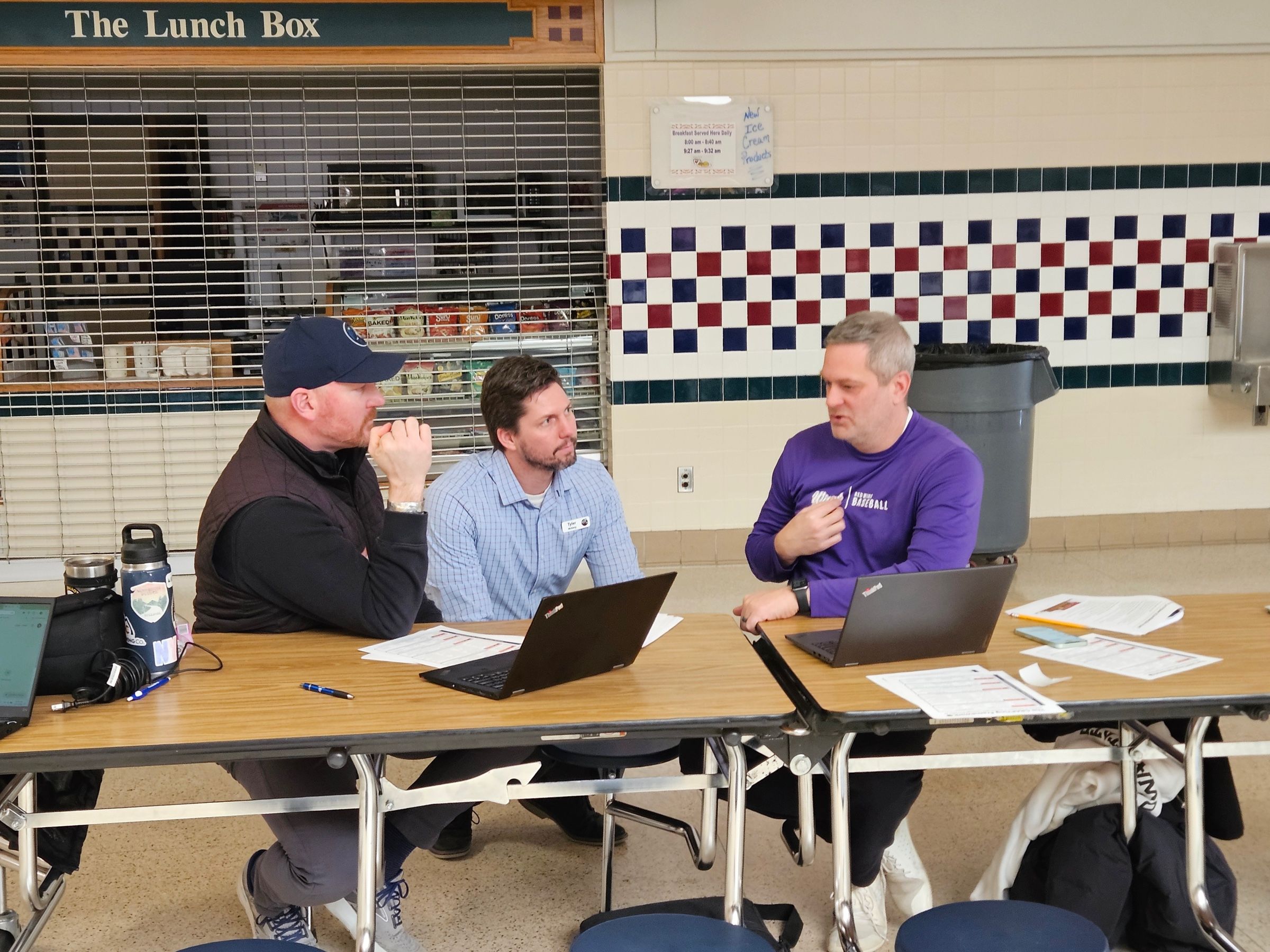
Keep going: a monthly thinking partner
Ongoing AI Coaching
2 to 4 hours a month, 6 to 12 months typical, virtual or on site
Some AI efforts don't need another workshop. They need someone to think with.
Ongoing coaching gives the leaders driving AI in your organization a monthly thinking partner. We meet every month and work on whatever is live: rollout questions, which use cases deserve attention, what to try next, and what to skip entirely.
It's how KL Engineering went from a single training to a company-wide practice, with their own AI hub and custom tools they built themselves. My favorite part of that story is the last part. They built it themselves.
Book a callIt's not tool specific because a lot of things you look at are very tool specific. This can be used across all the large language models, the commercial ones, the free ones, whatever.
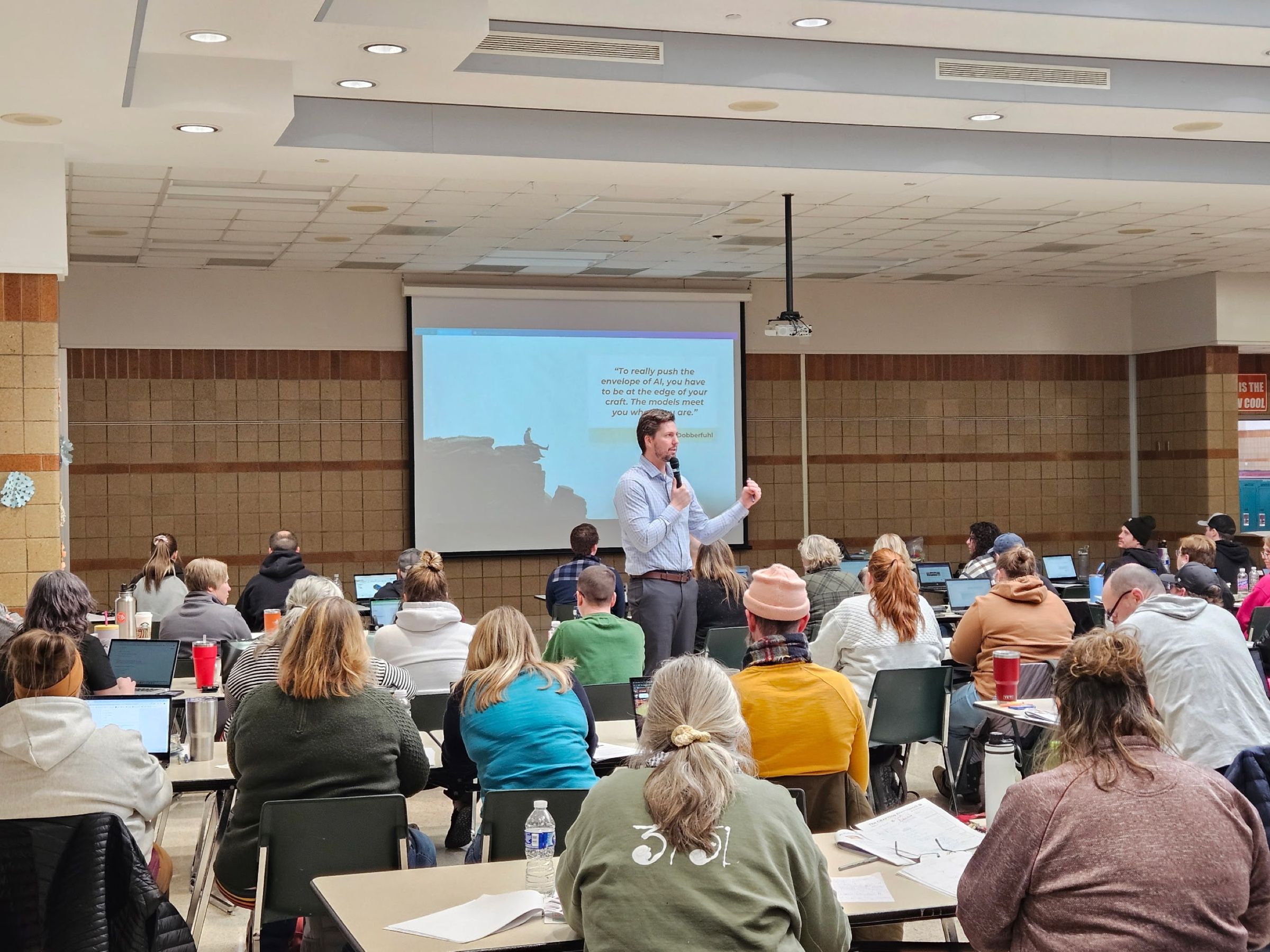
For educators: K-12 and higher ed
Educating with AI
90 minutes to 2 hours, keynote or workshop, in person or virtual
I spent two decades in education before Amplified Impact existed, first in the classroom and then as an instructional coach. So this one is personal.
Educating with AI is built around the 7 Habits to Amplify Learning, the Intentional Intelligence Scale, and 18 concrete design moves that keep students doing the thinking. It works for faculty meetings, PD days, and conference stages alike. On a stage, it runs as the keynote Teaching with AI: 7 Habits to Amplify Learning.
Educators don't need one more thing on their plate. They need AI to take things off it without giving up the learning. That's the line this session walks, and it's the reason educators keep asking for it.
Book a callTyler has an amazing ability to connect with people of various levels of AI expertise in the same workshop. I was thrilled to bring him in to help my division understand how AI can help them in their daily work.
Also available: AI-assisted role play, deeper sessions on a single tool, and industry-specific frameworks. We scope custom modules together on a discovery call.
Questions I hear on almost every call.
Will this land with our skeptics?
Yes, and they're often the ones who surprise you. I've trained thousands of people, and almost every room holds the same mix: a few enthusiasts, a lot of fence-sitters, and a handful of arms-crossed skeptics. The session is built for that mix.
Nobody gets talked down to, nobody gets left behind, and the skeptics test AI on their own work instead of taking my word for anything. That's usually what turns them.
Are you selling a specific AI tool?
No. I'm tool-agnostic. I teach the thinking skills that work across ChatGPT, Claude, Gemini, Copilot, and whatever ships next.
If your organization already has an approved tool, we train on that one. I don't sell licenses, set up software, or push a platform.
Can you write our AI policy?
No, and you don't want me to. I don't hand you a policy, and I'm not your compliance shop.
I get your team sharp enough to author the rules they'll actually stand behind, because those are the only ones that stick. Your legal and compliance people own the sign-off.
Do you train in person or virtually?
Both. Every format on this page runs in person or virtual, and the virtual versions are built as working sessions, not webinars.
Cameras on, hands on keyboards, real work on the screen. Teams are usually surprised how well the virtual format holds up.
Not sure which way to start?
Most teams start with one hands-on session and grow from there, but the right first step depends on where your team is now. A quick call sorts it out. Just a conversation about your people and what you're trying to accomplish.