The work speaks
Confidence you can see. Work you can point to.
Across 547 post-training survey responses, participants reported confidence moving from 2.3 to 3.7 on a five-point scale. Read the case studies for the context behind the numbers.
- 10,000+
- professionals trained since 2024
- NPS 79
- more than double the 38 B2B median (ACEC Utah)
- 8.8/10
- session rating (UAB Medical Center)
- 92%
- reported improved confidence (UAB Medical Center)
Case study: corporate
Their own survey asked for more. So we kept going.
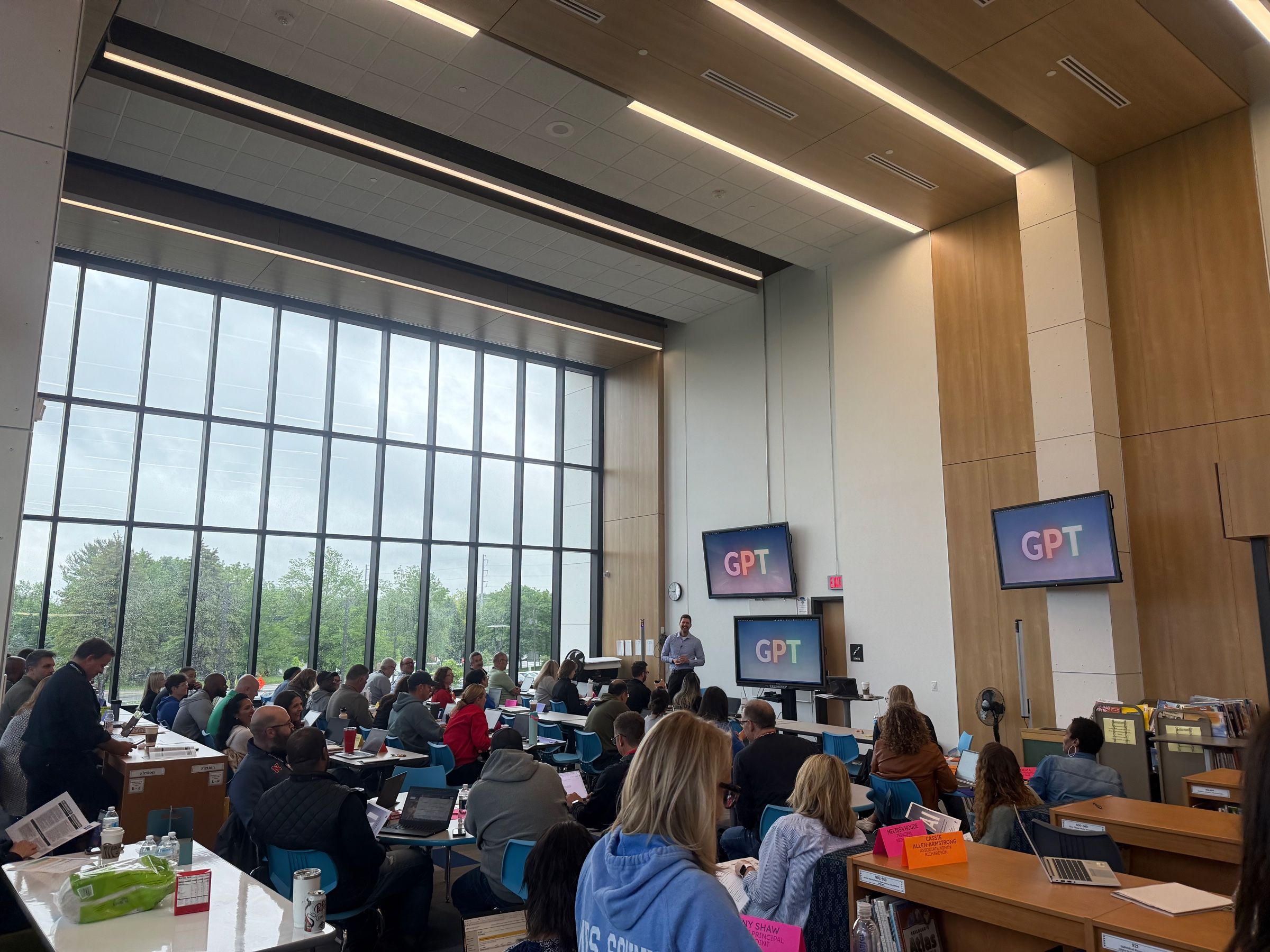
APi brought me in for a half-day workshop: about seventy-five people across four operating companies, and not just the tech-curious ones. Project managers, estimators, finance, HR, purchasing, safety, branch leaders, all in the same room.
The survey came back strong, but the number that mattered most wasn't a score. Asked what support they wanted next, their top answer was "more time to implement." Twenty-seven people said some version of it.
So one workshop turned into a six-month partnership, and now we're building those habits into their real workflows, team by team.
When the room asks for more, you're past awareness. That's adoption starting.
- 2.37 to 3.66 AI confidence, before and after the day
- 92% rated themselves higher than when they walked in
- 20 of 38 responses scored the day a perfect 10
He made AI feel doable for everyone in the room. From estimators to branch leaders to executives, our teammates were engaged and using it the same day.
Case study: engineering association
Eighteen engineering firms, one day, zero detractors.
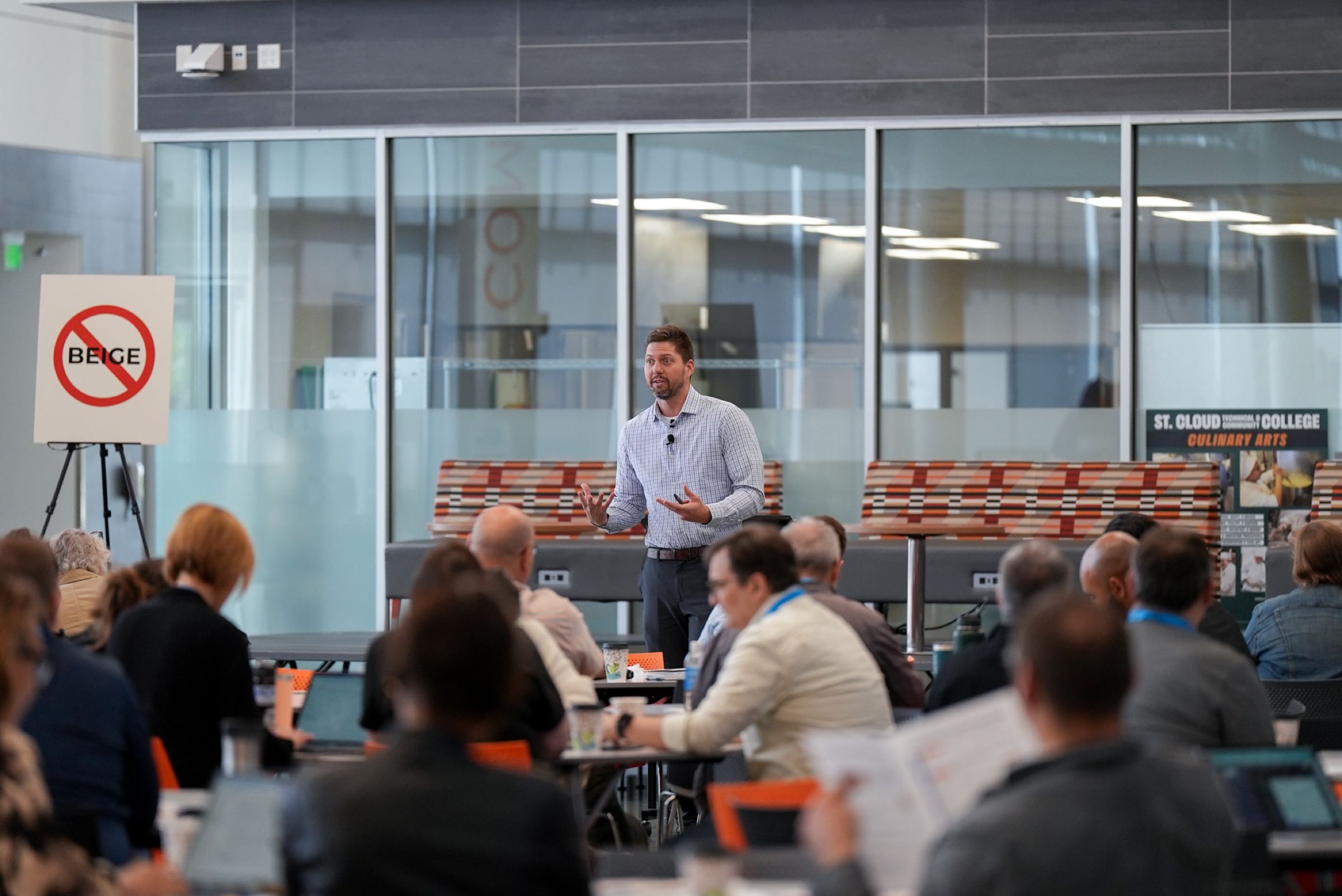
ACEC Utah brought me to their Leading Forward Forum alongside Dan Oblinger, a hostage negotiator who teaches emotional intelligence. Engineering leaders from eighteen firms, a full day, and a pairing that looked odd on the agenda: EQ and AI, side by side.
It works because both come down to the same skill. Whether you're navigating a hard conversation or directing an AI tool, you're learning to communicate with precision and intent. Engineers respect that framing, but they don't take it on faith, and I wouldn't want them to.
So we skipped the futurist slides and put the room to work. Participants spent the day using AI on their own projects and practicing the conversations they usually avoid. The turn happened the way it always does: a skeptic gets a real result on real work, shows the person next to them, and the energy in the room changes.
Other ACEC chapters have been asking about the format ever since.
- NPS 79 zero detractors, from 34 responses across the eighteen firms
- 2.2 to 3.6 AI confidence in a single day, a 62% jump
- 76% rated the day a perfect 10
This was an unlikely combination of topics that went well together. Both presenters were experts in their fields and spoke in terms the layman could comprehend. I left after a full day of training wanting more and knowing where to find more.
Amazing! An experience that has motivated me to immediately adopt, adapt, and apply. A thought-changing experience that has helped me shift my mindset on communication and efficiency.
Case study: engineering firm
"We'd be three years behind without you."
KL Engineering came to me after sitting through the other kind of AI training. The seminar kind, the kind their team described as canned and rushed.
They didn't want another event. They wanted their whole firm actually using AI.
So we built a six-month partnership instead of a one-day transaction. It started with hands-on training, rolled into a "12 Days of AI" challenge to turn the spark into a daily habit, and continued with coaching for the internal team driving the rollout. I gave them starting-point resources, and they put the KL twist on them and made them their own.
I don't publish survey numbers for this engagement, so here's the behavior instead, which is the harder proof anyway.
Six months in, they weren't waiting on a vendor. They were building, and most of it happened without me in the room.
What KL built
- A shared framework for working with AI, adopted across the whole firm
- An internal AI Hub, built by their own team
- Custom GPTs for their own workflows
I don't think we could have done it without you. I think we could have, but we'd be three years behind.
I prefer the collaboration feel of what we did with you compared to the other seminar type. Even though there was some like collaboration points in the seminar type ones we've done before, it just felt canned and it felt rushed.
Case study: government
Seventy public-works employees. A confidence jump you can measure.
Government training has a translation problem. Most AI workshops get built for corporate audiences, and the examples fall apart the minute someone asks about procurement rules, public records, or a budget the whole county gets to see.
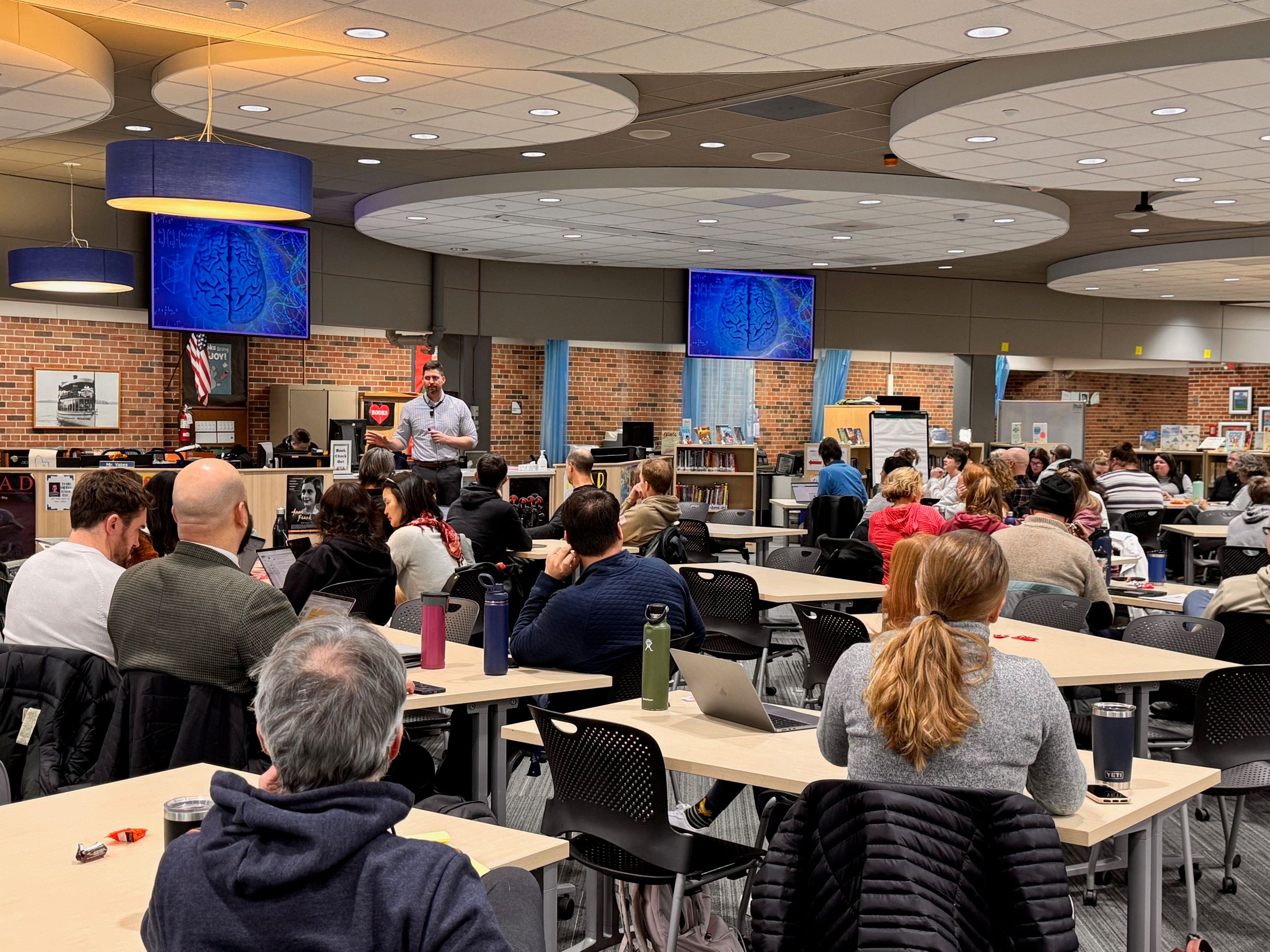
Washington County Public Works brought me in to train about seventy employees, so we built the training around the work they actually do instead of hypotheticals. Same method as every engagement: less talking, more doing, and their actual work on the screen.
Public employees answer to taxpayers and don't hand out praise for shiny new things.
When this group says they'd recommend the training, it's because they left with something they could use.
- +1.21 points of AI confidence gained from where the room started
- 82% scored the training an 8 or higher
- NPS 60 well above the B2B median of 38
Our teams came in with real problems and left with working tools. In one day, staff built a pavement workbook, a permit reviewer, and a plat test they can actually use.
Case study: corporate
The CEO went first. Then his whole team got it.
This one started at the top. The CEO had been using the framework himself for two weeks and wanted his corporate support team working the same way.
We ran two virtual modules for sixty-five people at Culligan Water, practicing on their actual work in the tools they already had.
Then came the part I care about most: they took over. The team ran a three-week AI Amplifier Challenge on their own.
Training that ends when the trainer leaves isn't adoption. This didn't end.
- 2.31 to 3.75 AI confidence, before and after
- 92% scored the training an 8 or higher
- 5.3 hours a week saved on average, reported by the nineteen people who estimated
I will be a far better communicator, planner, and strategist when I implement these tools.
More voices
Three more, in their own words.
In a short amount of time, I gained more confidence in using Gen AI tools and the potential of how I can use it as a daily tool.
This was much more fun than I expected. I feel less fearful of what AI means for our future.
An excellent presentation on how to optimize our work through the use of technology and how to be more connected emotionally to work conversations.
Organizations I've trained
Corporate
- OptumRx
- Culligan Water
- APi
- Signature Brands
- KL Engineering
- Kahler Automation
- Church Mutual Insurance
- Houston Engineering
- Northern Metal Products
Healthcare
- UAB Medical Center
- Vanderbilt University Medical Center
- California Hospital Association
- Powell Valley Healthcare
- Wyoming Department of Health
Government
- Washington County
- City of Burnsville
- City of Goodyear, Arizona
- City of Lakeville
- Douglas County
- City of Alexandria
- City of Brooklyn Park
Higher education
- University of Minnesota
- University of St. Thomas
- Normandale Community College
- Central Lakes College
- M State
K-12
- Minnetonka Public Schools
- Prince William County Public Schools
- Osseo Area Schools
- Prior Lake-Savage Area Schools
- Red Wing Public Schools
- Winona Area Public Schools
Associations
- ACEC Utah
- ACEC Minnesota
- ACEC Arizona
- Twin Cities NECA
- MASBO
- MSOPA
- MCEA
Let's talk about the work your team wants to do.
When leadership asks whether the training worked, you'll want an answer with numbers in it. A quick call is the fastest way to find out what those numbers could look like for a team your size.